Guide for parents
myRoutina works best when the chart is part of a calm, shared plan rather than a list of orders. These tips explain the thinking behind it, based on guidance from child health organisations such as the American Academy of Pediatrics, the CDC and UNICEF.
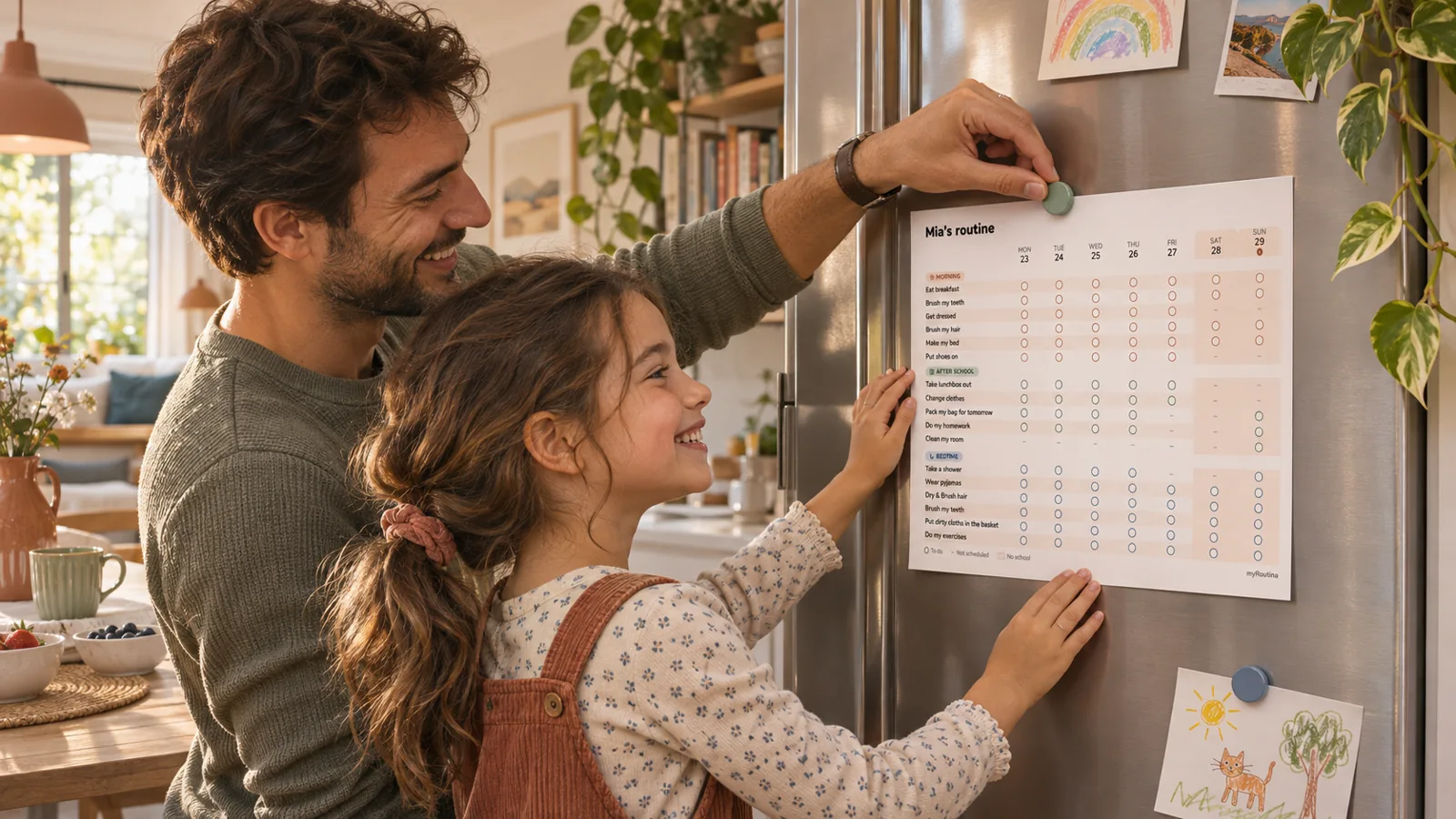
Choose tasks that fit their age
Helping at home is good for children. It builds independence and a sense that they matter to the family. What counts is that the tasks match what your child can really do.
A small win every day does more than a long list that ends in tears. Start with two or three tasks, and add more once those feel easy.
- Little ones: put toys in a basket, help feed a pet, bring their plate to the sink.
- School age: make their bed, pack their school bag, set the table.
- Teens: do a load of laundry, help cook a meal, plan their own week.
Sources
- Age-Appropriate Chores for Children, American Academy of Pediatrics (HealthyChildren.org). Last checked 23 Nov 2026.
- Chores and Children, American Academy of Child and Adolescent Psychiatry. Last checked 23 Nov 2026.
- Household Chores for Teens, American Academy of Pediatrics (HealthyChildren.org). Last checked 23 Nov 2026.
Praise the effort, and be specific
Noticing what your child did, and saying so, is one of the simplest things that works. Specific praise tells them exactly what to repeat.
“You packed your bag all by yourself!” works better than “Good job.” Praise the effort, not only the result.
Sources
- Tips for Using Praise and Rewards, US Centers for Disease Control and Prevention. Last checked 23 Nov 2026.
- Positive parenting tips for children aged 6 to 10, UNICEF. Last checked 23 Nov 2026.
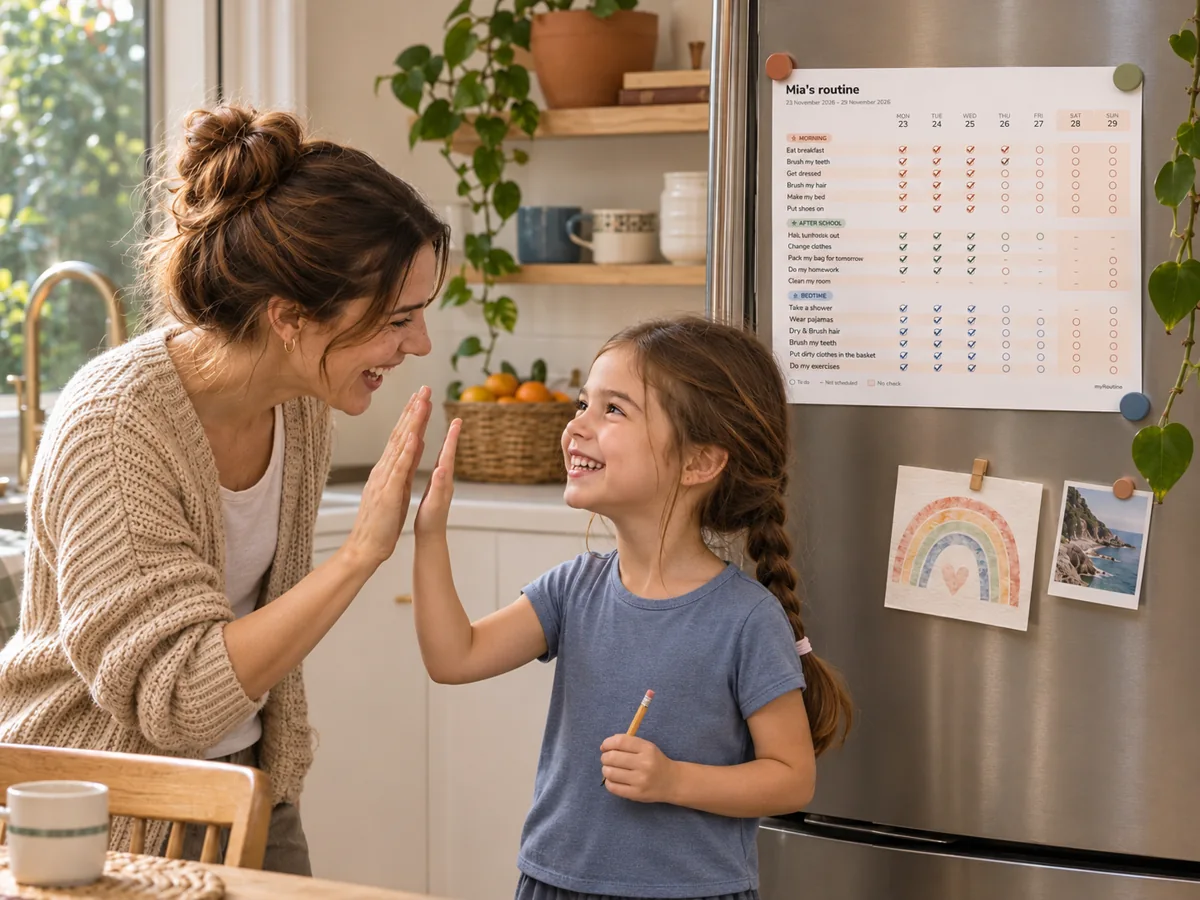
Stickers to start, then let them fade
Small rewards, such as a sticker or choosing the bedtime story, can help a new habit get going, especially for younger children. Once the routine sticks, fade them out gradually.
Try to present tasks as the way everyone helps the family, not as paid jobs. Research shows that big rewards children come to expect every time can make them less keen to do the task for its own sake. Praise does not have that effect.
Sources
- Tips for Using Praise and Rewards, US Centers for Disease Control and Prevention. Last checked 23 Nov 2026.
- Positive Reinforcement Through Rewards, American Academy of Pediatrics (HealthyChildren.org). Last checked 23 Nov 2026.
- A meta-analytic review of experiments examining the effects of extrinsic rewards on intrinsic motivation, Deci, Koestner and Ryan, Psychological Bulletin (1999). Last checked 23 Nov 2026.
Agree the plan together, before the week starts
Children find it easier to cooperate when the rules are clear and stay the same from day to day. Tell them exactly what you want them to do, rather than what not to do.
Sit down together before the week starts, look at the chart, and let them help choose or order some of the tasks, so nothing comes as a surprise.
- Try a “when–then” plan: “When your jobs are ticked, then it’s free time.”
- Put the chart where they can see it and tick it themselves.
Sources
- What's the Best Way to Discipline My Child?, American Academy of Pediatrics (HealthyChildren.org). Last checked 23 Nov 2026.
- How to discipline your child the smart and healthy way, UNICEF. Last checked 23 Nov 2026.
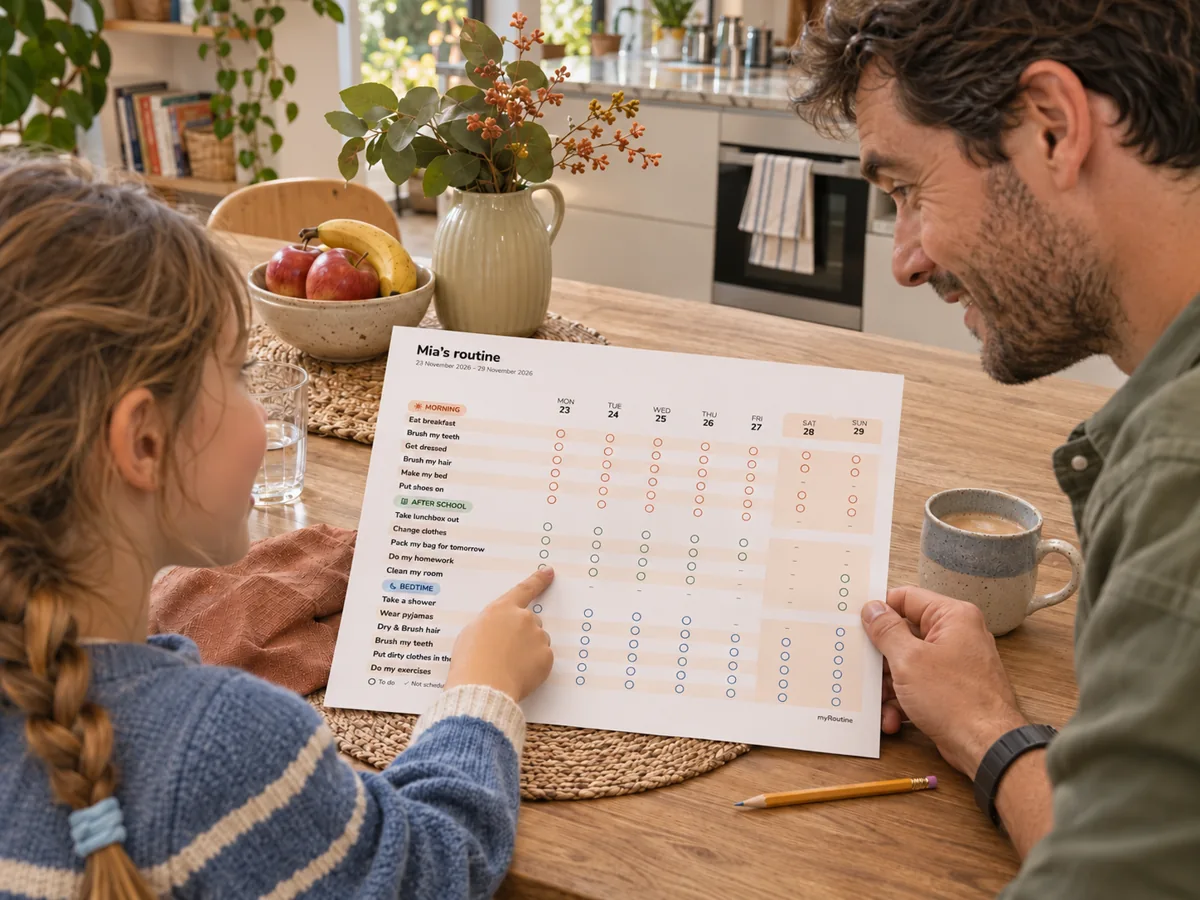
When a task is missed
Missed tasks happen. Stay calm and keep any consequence small, short and connected to the task: usually, the task still needs doing before free time starts.
Explain calmly what will happen if a task is skipped, then follow through calmly and the same way each time, without anger.
Sources
- What's the Best Way to Discipline My Child?, American Academy of Pediatrics (HealthyChildren.org). Last checked 23 Nov 2026.
- How to discipline your child the smart and healthy way, UNICEF. Last checked 23 Nov 2026.
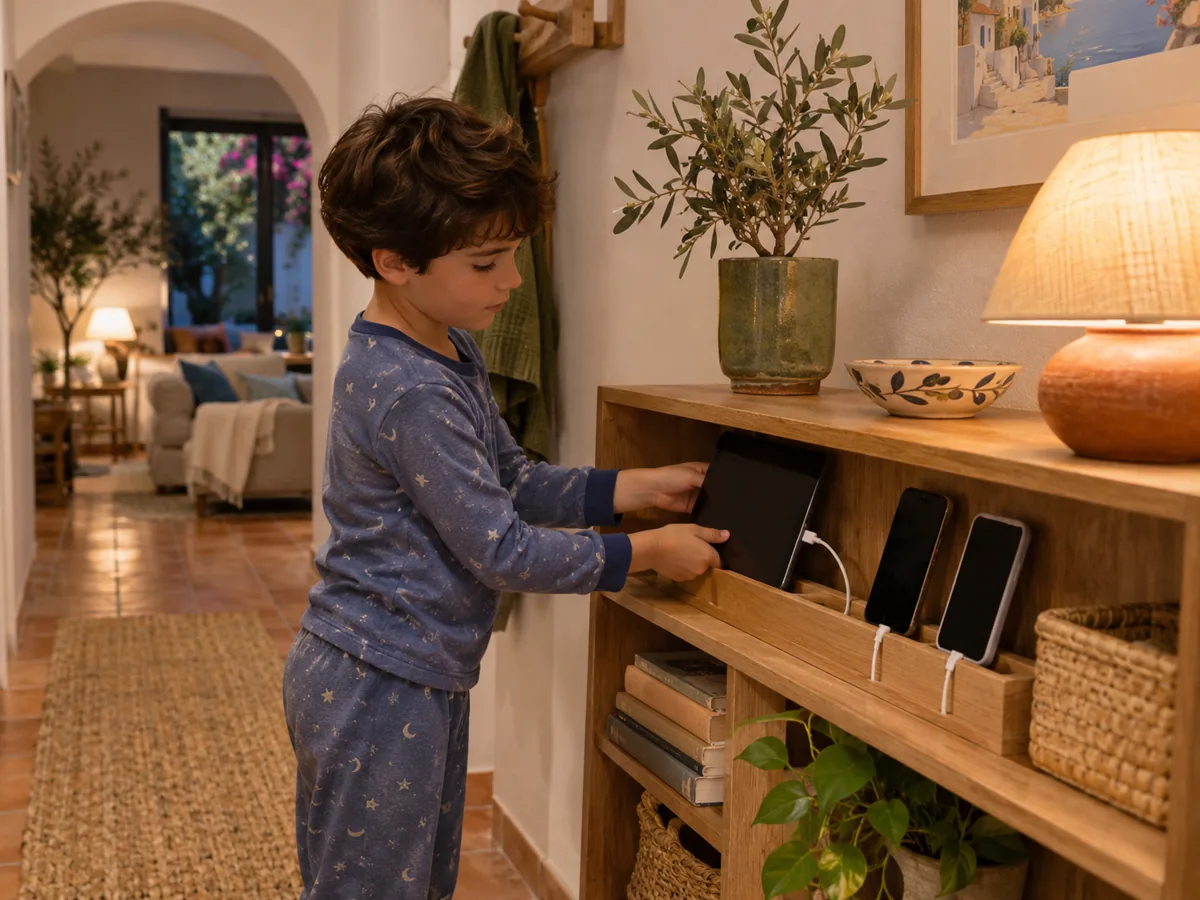
Screens: a family plan, kept separate
Screens work best with a family media plan that everyone knows: when and where screens are used, what for, and when the house is screen-free. Older children can help set the rules. Make that plan on its own, separate from chores.
Child health experts advise against using screen time as a reward. A 2019 study found that children whose parents gave screen time as a reward or took it away as a punishment tended to spend more time on screens, not less.
Sources
- Helping Kids Thrive in a Digital World: AAP Policy Explained, American Academy of Pediatrics (HealthyChildren.org). Last checked 23 Nov 2026.
- Screen Time and Digital Media Use, Seattle Children's Hospital. Last checked 23 Nov 2026.
- Controlling children's behaviour with screen time leads to more screen time, University of Guelph (2019). Last checked 23 Nov 2026.
What to avoid
The American Academy of Pediatrics advises against hitting, yelling at or shaming children, and UNICEF says shouting and physical punishment never help. If a day goes wrong, start fresh tomorrow. A skipped day in myRoutina is never counted as missed.
Sources
- What's the Best Way to Discipline My Child?, American Academy of Pediatrics (HealthyChildren.org). Last checked 23 Nov 2026.
- How to discipline your child the smart and healthy way, UNICEF. Last checked 23 Nov 2026.
General guidance, not professional advice. If you are worried about your child’s behaviour, development or wellbeing, talk to your doctor, health visitor or another qualified professional.
Written by myRoutina in our own words, based on the sources listed under each section. We check those sources every week and update this page when their advice changes.